The Neurobiology of Questioning Anxiety: Amygdala Threat Versus Psychological Safety
Every teacher recognizes the freeze. You call on a student, the room goes quiet, their shoulders tense, and their eyes lock onto their desk. Traditional discipline often misinterprets this silence as disinterest or defiance. In reality, being called on without warning triggers a genuine fight-or-flight freeze response.
When put on the spot in front of peers, a student's brain perceives sudden evaluation as an immediate social threat. The Amygdala Threat Response fires within 100 to 200 milliseconds. Cortisol and adrenaline spike, diverting blood flow away from the prefrontal cortex, which handles recall, reasoning, and speech.
When an amygdala hijack happens, survival instincts override cognitive recall. Cognitive Load Theory shows that working memory holds only four to seven chunks of information at best. If you call a student's name before asking the question, panic fills those mental slots instantly, leaving no room for thinking.
Mary Budd Rowe's Wait-Time Thresholds and Cognitive Scaffolding
Extending silence after asking a question from the typical 0.9-second baseline to 3 to 5 seconds dramatically improves student responses.
Research by Dr. Mary Budd Rowe found that teachers usually wait only 0.9 seconds before jumping back in, repeating the question, or moving to another student. This habit rewards quick answers from outspoken students and shuts down thoughtful reflection.
Her research demonstrated that stretching wait time to 3 to 5 seconds transforms classroom discussions:
- Average student response length expands by over 300%.
- Unsolicited, higher-order contributions quadruple.
- Responses of "I don't know" drop from 30% to under 5%.
- Quiet, at-risk, and multilingual learners show the fastest gains in participation.
Understanding the psychology of decision fatigue helps explain why: deliberate pauses give students the mental buffer they need to move from surprise to clear reasoning.
The 4-P Calling Protocol and Lesson Arc Integration
The 4-P Calling Protocol (Pause & Jot, Pair, Pick, Praise) gives every student time to think, jot down notes, and talk with a partner before speaking to the whole room.
"Starting today, we are using our Classroom Name Picker for daily questions. Here is my promise to you: I will never use this wheel to catch you off guard or embarrass you. You will always get 20 seconds to think and write, followed by 30 seconds to rehearse with your partner before anyone speaks. If you ever get stuck, you have the right to phone a classmate or pass and listen first. In this room, making a thoughtful attempt matters far more than having a perfect answer on the spot."
When to Cold Call: The Guided Practice ('We Do') Phase
Timing makes or breaks cold calling. Never call on students cold during Direct Instruction ('I Do'), when you are introducing new material. Expecting students to explain a fresh concept before they have grasped it creates unnecessary panic.
Save random calling for Guided Practice ('We Do'), right after you model an example and before students work independently. At this stage, students already have notes, understand the basic pattern, and can test their thinking with low stakes.
The Four Steps of the 4-P Routine
Always ask the question to the whole room before naming anyone. That way, every student starts thinking rather than tuning out while someone else is called.
- Phase 1: PAUSE & JOT (15 to 20 Seconds): Deliver the prompt to the whole group: "Take 20 seconds to think and jot. Write down two keywords or your first equation step on your scratch paper." Avoid telling students "pencils down." Anxious students need an anchor. If their mind goes blank under the spotlight, written notes give them something concrete to look at and read.
- Phase 2: PAIR (30 to 45 Seconds): Give the cue to turn and talk: "Turn to your partner and compare your first step." Sharing an idea with one peer first lowers anxiety and catches misconceptions in private, so no student has to test an unformed thought in front of thirty people.
- Phase 3: PICK (Unbiased Random Selection): Spin an impartial tool on the board, like the Classroom Name Picker. Because the selection happens openly on screen, students see that the teacher isn't singling them out or testing compliance. The wheel simply acts as a fair, neutral selector.
-
Phase 4: PRAISE (Thought Process Validation): When the selected student shares, focus feedback on their thinking rather than just whether they got it right:
- "I like how clearly you organized that first step."
- "Thank you for pointing out that detail; it helps clarify the problem for everyone."
- "Your reasoning on variable X is right on track. Let's build on that together."
Focusing praise on effort and reasoning shows students that thinking through a hard question matters more than immediate perfection.
In-the-Moment Lifelines, Scaffolding, and an Error-Tolerant Culture
Fair questioning needs built-in escape valves: simple scaffolds, quick adjustments in difficulty, and lifelines that keep anxious students from freezing while showing the class that struggling with a problem is normal.
Scaffolding on the Spot: The 'Question Pivot'
When the spinner lands on a student who looks hesitant or anxious, use a Question Pivot. Step the question down from high-level analysis to a concrete observation, without changing the lesson goal.
Most complex prompts offer multiple entry points:
- Original High-Level Prompt: "How does the author's diction in stanza 3 reinforce the theme of isolation?"
- The Observational Pivot: "Marcus, look at stanza 3 with me. Which single adjective or color word catches your eye first?"
- The Next Step: Once Marcus points out the word "gray", validate the observation and invite the rest of the room in: "Exactly—'gray.' Who can build on what Marcus found and connect 'gray' to the mood?"
Pivoting gives the student an immediate win. They avoid getting stuck, contribute something real, and stay engaged in the discussion.
The Anatomy of Low-Stakes Lifelines: Phone a Friend and Pass-and-Return
When a student is unsure, structured lifelines allow them to consult a peer or pass temporarily with a guaranteed gentle return. Teach students two explicit lifelines during week one:
- The "Phone a Friend" Lifeline: If a student feels stuck, they may state: "I'd like to phone a friend." The teacher confirms: "Sure! Who would you like to ask?" The selected classmate provides a clue or starting formula rather than solving the problem. The teacher returns to the original student: "Marcus gave us a great hint about the common denominator. How do we apply that to step two?"
- The "Pass-and-Return" Routine: If a student freezes, they may state: "Pass for now." The teacher validates: "Understood. Listen closely as Elena shares her reasoning, and I will come back to you right after so you can tell me which part of Elena's strategy made the most sense to you." After Elena speaks, the teacher returns warmly: "Marcus, did Elena's method for finding the axis of symmetry make sense, or would you have started differently?" Passing is a brief pause to listen and re-engage without shame.
| Classroom Scenario | Punitive / Escalating Reaction | Dignity & De-escalation Script |
|---|---|---|
| Freezing Under Spotlight | "We covered this yesterday. Wake up." | "Take a breath. Review your Think & Jot notes for 10 seconds, or phone a friend for a clue." |
| "I Don't Know" Blank State | "Did you even read last night?" | "That's completely fine. What is the very first piece of information the prompt gives us?" |
| Partially Incorrect Answer | "No, that's wrong. Who can fix this?" | "You nailed step one! Let's examine that negative sign together as a team." |
| Acute Performance Panic | Forcing student to speak publicly | "Write your keyword on your whiteboard; I'll read it aloud for you." |
| Shutting Down or Refusing to Speak | "If you refuse to speak, you are getting a detention." | "I can see you're not ready right now. I will pass for this turn, and we'll check in for one minute at the bell. [Turn to next student smoothly]." |
Treating Mistakes as Useful Class Clues
The fastest way to lower questioning anxiety is to build a culture where mistakes are treated as useful clues for everyone. Dr. Amy Edmondson defined Psychological Safety as "a shared belief held by members of a team that the team is safe for interpersonal risk-taking." In a classroom, that means taking an intellectual risk never leads to embarrassment.
In low-anxiety classrooms, errors become helpful teaching moments:
-
When an answer is incorrect:
- Traditional: "No, that's not it. Who actually knows the answer?"
- Reframed: "Wait, Marcus just pointed out the exact misconception that trips up most readers! I am so glad you mentioned that because it reveals the hidden challenge in this problem. Who can spot what Marcus just helped us uncover?"
-
When vocabulary terms are confused:
- Traditional: "You're confusing mitosis with meiosis again."
- Reframed: "I'm so glad you brought that up! Those terms look almost identical under a microscope. Let's inspect the prefix together so nobody gets tripped up."
Rooted in Dr. Carol Dweck's growth mindset scholarship, an error-tolerant culture teaches students how to articulate uncertainty:
- "I am confident about part 1, but I am still formulating my hypothesis on part 2."
- "I need 15 seconds to review my Think & Jot notes before answering."
- "The wording of that prompt is confusing me: could you break it into two parts?"
- "I do not know the answer yet, but I would like to phone a friend for their perspective."
Universal Warm Calling and Accommodations for Reluctant Profiles
Supporting students with anxiety, processing delays, or quiet personalities works best with private signals and flexible ways to participate.
Before cold calling begins, teachers can deploy universal Warm Calling: during independent reading or problem-solving, circulate quietly and whisper: "Sarah, your reasoning on question 4 is brilliant. When the wheel spins in two minutes, I would love for you to share that exact sentence." Giving hesitant learners a two-minute cognitive runway completely neutralizes performance panic.
For learners with IEPs, 504 plans, or selective mutism, establish these universal design safeguards:
- Non-Verbal Response Channels: Enable participation via mini-whiteboards, digital shared documents, or hand signals rather than public speech.
- The "Two-Fingers" Desk Signal: Establish a private signal (such as resting two fingers on the corner of the desk) that conveys: "My anxiety is elevated today; please bypass public calling." Honoring this boundary builds trust.
Neutral Randomization, Sensory Calm, and Data Hygiene
When teachers call on students by hand, learners often see it as targeting, favoritism, or a pop quiz for misbehavior.
Psychologists explain this through Attribution Theory. When a teacher picks someone directly, students search for hidden motives: "She picked me because I looked away" or "He only calls on the top students." That suspicion creates defensiveness. Letting an impartial digital tool handle the selection frees the teacher to act as an ally and coach.
Teacher Calling Habits and Voice Equity
Without realizing it, most teachers tend to call on students seated in the front rows, verbal extroverts, or students they want to check for paying attention:
- Front-row and center-desk students receive up to 70% more interaction than students on the perimeter.
- Outspoken students take more than 65% of questioning turns, widening the participation gap.
- Restless learners get called on as a reprimand, which causes resentment rather than engagement.
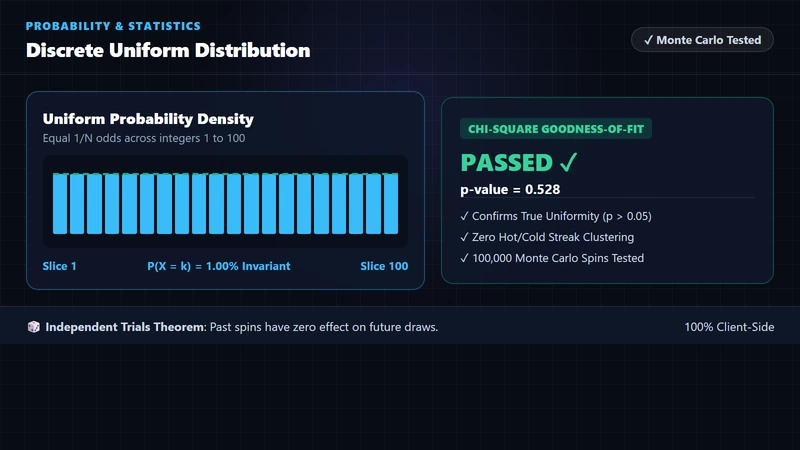
Building genuine Classroom Voice Equity means taking personal bias out of the selection. When teachers use the Classroom Name Picker, those habits disappear. Every student sees their name on an equal slice of the wheel with clear, visible odds. The wheel takes care of the pick; the teacher provides the support.
Sound and Sensory Calm: Gentle Chimes vs. Arcade Noises
Noise levels in the classroom have an immediate effect on student stress. Sudden alarms and clacking sounds startle learners, while gentle audio keeps the room focused and relaxed.
Many online spinners were built for trade shows or casinos, with features that do not belong in a learning environment:
- Loud clicking resembles gambling machines and causes sensory overload.
- Flashing neon lights create needless distraction.
- Harsh buzzers trigger an immediate startle reflex in sensitive students.
To support a calm classroom, tools need to keep sounds low-key. The Classroom Name Picker uses soft chimes and smooth animations instead of arcade noise, so the spin feels like a relaxed transition rather than an alarm.
Student Privacy: Zero Server Storage and Verified Compliance
Sensory calm matters, but student data privacy is essential. As outlined in our Student Privacy Pledge, the Classroom Name Picker runs entirely inside local browser memory. Zero bytes of student data ever travel across the internet or touch an external server. Because no student names are stored remotely, the tool is fully FERPA and COPPA compliant, removing the need for complex District Data Privacy Agreements (DPAs) or user accounts.
Actionable Weekly Implementation Checklist
Here is a simple rollout to establish low-anxiety calling in your classroom: